
Our process
More ways to
be yourself.
We explain the logic behind unwritten social cues in plain language, with concrete examples. If you want to blend in sometimes, you can choose which cues to use, which to adapt, and when to ask someone to meet you halfway.
Explore the five steps
Choice comes first
You get to decide what feels worth practicing.
Sometimes using a familiar neurotypical cue makes an interaction easier. Sometimes being direct, writing your thoughts down, or asking for a change feels better. Taking breaks, avoiding eye contact, and communicating in your own way are always welcome here.
Five steps, at your pace.
-
Pick a moment that matters.
Choose a real situation and name what you want from it. At a café, your goal might be to order without feeling rushed.
See an example
“I want to order without feeling rushed when there’s a line.”
-
Explain why the cue exists.
We spell out what a cue signals, why someone might expect it, and when it’s useful or optional. Saying “I’m still deciding” tells a barista you heard them and need a moment.
-
Rehearse a few versions.
We compare a familiar phrase, a direct request, or a written option. We explain what each one communicates so you can choose what feels right.
See an example
Try “Could I have a second to decide?” or show the order you’ve written on your phone. Either gets the message across.

A conversation at the café. -
Practice in real situations.
When you’re ready, try one option in a setting you choose. Start small and look for low-pressure chances to practice it again. Notice how the other person responds and how it feels for you.
-
Reflect, adjust, and try again.
Afterward, we review what happened: Did it help you get what you needed? Why might it have worked, and how much energy did it take? Together we decide what to keep, change, or drop, then choose one thing to practice next.
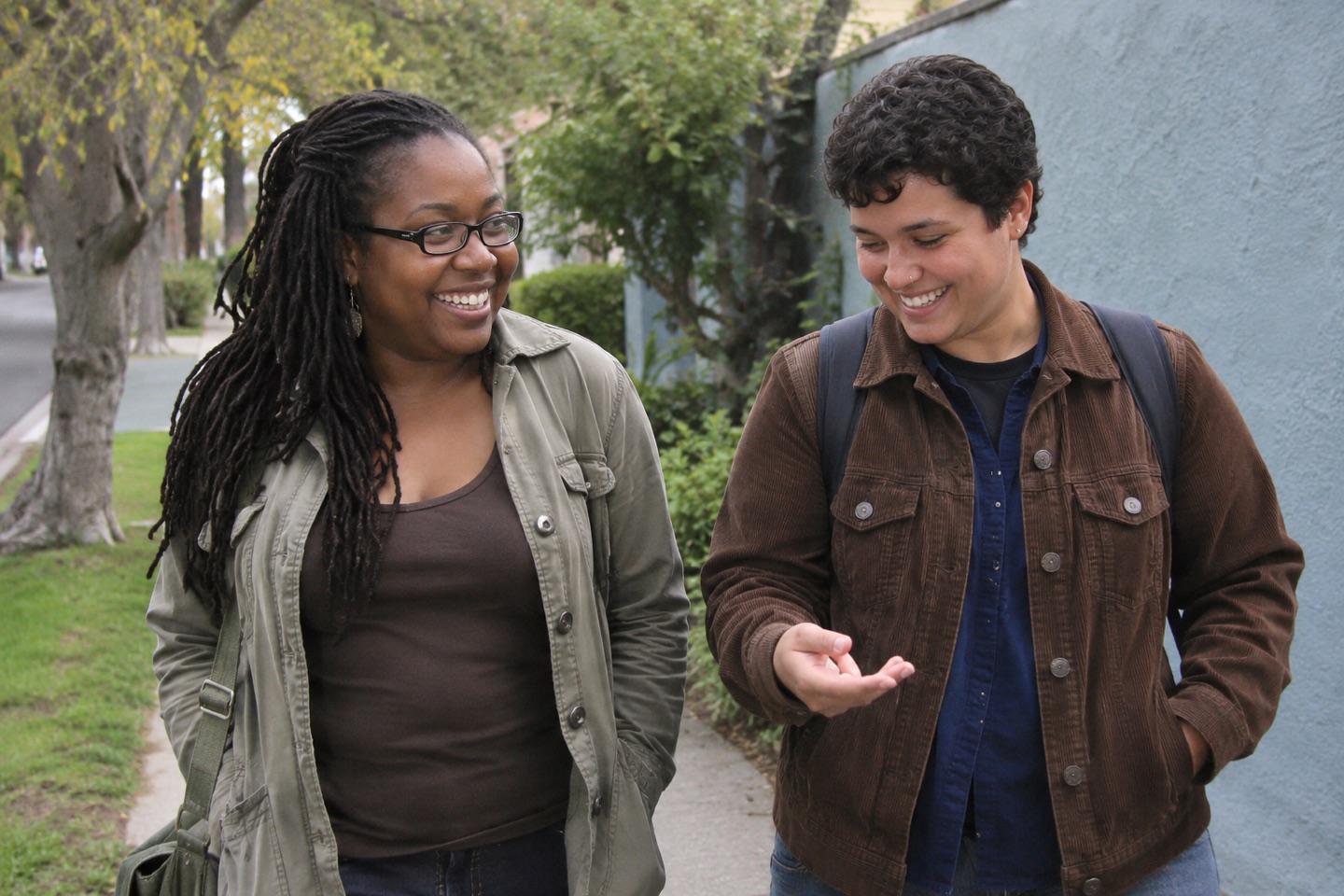
Sharing a laugh on a neighborhood walk.
Start with one moment.
Tell Diego what you’d like help with, even if you’re still figuring it out.
A little reminder
You’re allowed to ask for the conditions that help you connect.